Homo Deus

Homo Sapiens is an Endangered Species

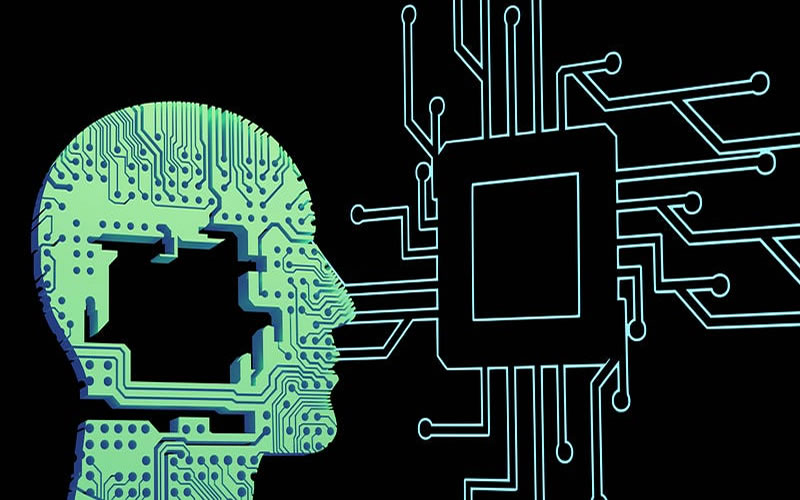
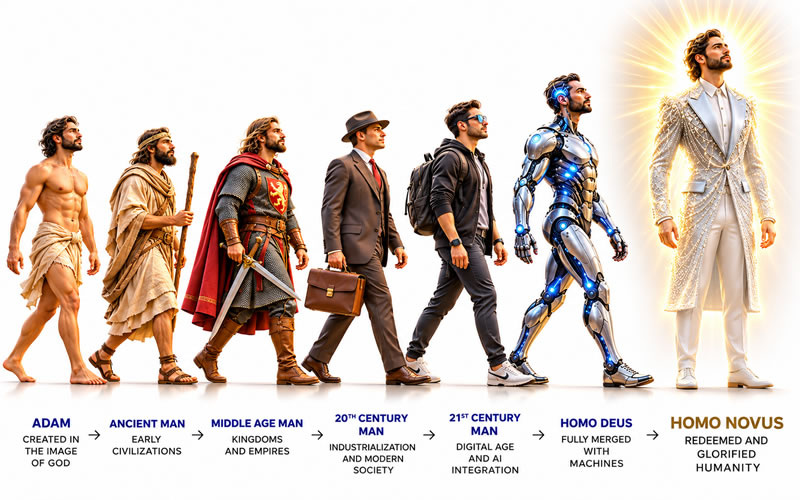
Humanity is racing to upgrade itself through artificial intelligence, biotechnology, and genetic engineering. But is Homo sapiens in its current form the final chapter of the human story? The Bible reveals a future far greater than anything technology can achieve. It is a new humanity in Jesus Christ. The Human Species Is Approaching a Turning Point For thousands of years, human beings have occupied the centre stage of life on Earth. In scientific terms, we belong to a species known as Homo sapiens. The name scientists use for modern humans, including you and me. We have built civilizations, explored the oceans, travelled into space and developed technologies that our ancestors could scarcely have imagined. We have conquered diseases that once wiped out entire populations, connected distant parts of the world through the internet and created machines capable of performing tasks that previously required human intelligence. Yet something remarkable is happening. The very species that has dominated the planet is beginning to question its own future. Artificial intelligence is advancing at an extraordinary pace. Biotechnology is opening possibilities for altering the human body at the genetic level. Scientists are exploring ways to slow ageing, extend healthy lifespans, overcome some of the biological limitations that have defined human existence, and potentially achieve immortality. These developments are not simply technological stories. They are forcing us to reconsider what it means to be human. What happens when machines can perform tasks that once distinguished human intelligence? What happens when genetic engineering gives us greater control over the characteristics of future generations? What happens when biotechnology begins to challenge the limitations of ageing and disease? And perhaps the most important question of all: Is Homo sapiens the final chapter of humanity’s story? I believe the answer is no. In fact, Homo sapiens, as we know it today, is an endangered species. Not necessarily because artificial intelligence or genetic engineering will make us extinct, but because the Bible reveals that our present human condition is not God’s final intention for humanity. There is another humanity coming. I call it Homo Novus. It comes from two Latin words: homo (human) and novus (new). Together, they mean “new human” or “new humanity.” In this context, Homo Novus represents the new humanity God is bringing into being through Jesus Christ. Homo Deus is Humanity’s Attempt to Upgrade Itself For most of human history, we have accepted certain limitations as unavoidable. We are born, we grow old, we become weak, we get sick, and eventually we die. But modern technology is beginning to challenge some of these assumptions. Artificial intelligence promises to expand our intellectual capabilities. Genetic engineering could help eliminate certain inherited diseases. Biotechnology may eventually offer ways to slow some aspects of ageing. Brain-computer interfaces are opening new possibilities for connecting the human brain with machines. These developments are part of a much larger ambition to move beyond the limitations of ordinary human existence. Historian and author Yuval Noah Harari popularised this ambition in his book Homo Deus. He explores a future in which humanity uses technology to pursue godlike powers, including overcoming death, achieving happiness, and gaining unprecedented control over life. The underlying ambition is not difficult to understand. Who wouldn’t want to live longer, stay healthy, become more intelligent, or escape the suffering of human existence? These possibilities are attractive because they speak to desires that have always existed within us. But there is a more consequential question we must ask. Even if we become healthier, more intelligent, and technologically advanced, will we have overcome the limitations and challenges that define the human condition? Will artificial intelligence and genetic engineering remove greed, hatred, jealousy, selfishness, and corruption from our nature? Technology may improve many aspects of human existence, but it cannot, by itself, solve the spiritual problem at the heart of humanity. We may eventually become more powerful, but power is not the same as goodness. We may become more intelligent, but intelligence is not the same as wisdom. We may learn to manipulate biological processes, but that is not the same as conquering death. Imagine humanity living for thousands of years, still consumed by the same sinful desires, but now armed with greater intelligence, power, and technology. Such advances could magnify our capacity for evil and make its consequences far more devastating. This is where the human ambition represented by Homo Deus or transhuman encounters its greatest limitation. The Problem With Homo sapiens Is Deeper Than Biology To understand why Homo sapiens is not humanity’s final destination, we must go back to the beginning. According to Genesis, God created humanity in His image and likeness. “So God created man in his own image, in the image of God created he him; male and female created he them” (Genesis 1:27). Human beings were created with dignity, purpose, and the capacity to relate to their Creator. We were entrusted with responsibility over creation and called to reflect God’s character in the world. But something went terribly wrong. Through disobedience, sin entered the human experience, and with it came death. God had warned Adam that disobedience would bring death (Genesis 2:16–17). Following the fall, humanity became subject to mortality, suffering, corruption, and separation from God. In Romans 5:12, Paul explains it thus: “Wherefore, as by one man sin entered into the world, and death by sin; and so death passed upon all men, for that all have sinned.” This is important because it reveals that humanity’s greatest problem is not simply that our bodies are ageing or that our brains have limited processing capacity. Our problem is deeper than biology. We are not just a species that needs better hardware, more computing power, or improved genetic programming. We are a humanity that needs redemption. Consider the world around you. We have developed extraordinary technologies, yet wars continue. We have more information than previous generations, yet misinformation and deception spread rapidly. We can communicate across continents in seconds, yet loneliness, hatred and division remain widespread. We can send

Homo Sapiens is an Endangered Species Read More »
What Is Homo Deus? Understanding Humanity’s Quest to Become More Than Human

Artificial intelligence can now perform tasks that once required human intelligence. Scientists are exploring ways to edit genes, treat diseases, and extend human life. Researchers are also developing technologies that could change how we interact with computers and, potentially, how our brains and bodies function.  These technologies are improving our lives in remarkable ways, but it is also opening the door to a future where we may no longer be satisfied with being human as we are today. Modern technology is redesigning what it means to be human. But what happens when humanity begins to believe that it can overcome its own limitations and determine its own future? Does becoming more powerful make us better human beings? What Does Homo Deus Mean? Homo Deus is a Latin expression commonly translated as “god-man” or “human god.” In his book, Homo Deus: A Brief History of Tomorrow, Yuval Noah Harari uses the term to explore a possible future in which human beings use science and technology to acquire abilities that have traditionally been associated with gods. The idea is not that humans will literally become the all-powerful Creator described in the Bible. Rather, Harari examines how advances in biotechnology, AI, and other technologies could give people unprecedented control over life, their bodies, and their environment. Consider what humanity has already achieved. We can transplant organs, edit certain genes, communicate across continents instantly, and use machines to perform tasks that once demanded years of human training. These achievements would have seemed extraordinary to earlier generations. Now imagine what might become possible if these technologies advance much further. Could we significantly extend human life? Could we redesign aspects of our biology? Could intelligent machines become smarter than us and make decisions more effectively than we can?  How Does Humanity Hope to Become More Than Human? The idea of evolving beyond our current human limitations is driven by advances in several areas of technology. Although these fields are different, they share a common goal. They aim to expand human abilities and overcome limitations that have long defined our lives. 1. Artificial Intelligence Artificial intelligence is changing how we work, communicate, learn, and make decisions. AI systems can analyse enormous quantities of information, recognise patterns and perform tasks that previously required considerable human effort. As machines become more intelligent than humans and outperform us in more areas, some experts and futurists propose merging human intelligence with AI to enhance our abilities and keep pace with machines. This raises questions about identity, freedom, human control, and decision-making. And what happens when people begin to trust algorithmic decisions more than their own judgement? 2. Biotechnology and Genetic Engineering Biotechnology is giving scientists new ways to understand and influence living organisms. Gene-editing technologies, for example, offer possibilities for treating certain genetic diseases and advancing medical research. Some researchers and futurists imagine going further by using genetic engineering and other biological interventions to enhance human abilities and create designer babies and superhumans. The possibilities raise difficult questions. If we gain greater control over human biology, who should decide which characteristics are desirable? Should we attempt to eliminate particular weaknesses, or could the pursuit of biological perfection create new forms of discrimination? The ability to modify aspects of life brings enormous responsibilities. Not every change we can make is necessarily a change we should make. 3. The Pursuit of Longer Life We all want to live longer and avoid suffering. Modern medicine has helped us survive diseases and conditions that once caused widespread premature death. Longevity research seeks to understand ageing and find ways to extend healthy life. Some researchers and technology advocates envision much more radical breakthroughs that could significantly extend the human lifespan. In fact, several high-profile companies and ventures are backed by billionaires whose stated personal philosophies are explicitly about defeating death and achieving indefinite lifespans.  But there is an important distinction between extending life and overcoming death. Even substantial advances in longevity would not, by themselves, establish that humanity can achieve immortality. Nevertheless, the desire to defeat death remains one of the most striking ambitions associated with the Homo Deus vision. Why Does Humanity Want to Transcend Its Limitations? Humanity’s desire to overcome the human condition is nothing new. We have developed medicines to fight disease, tools to overcome physical weakness and technologies to travel farther and communicate faster. Much of this progress has improved human life. There is nothing inherently wrong with seeking cures for diseases, reducing suffering or developing technologies that help people. But can these achievements really fulfil our ultimate aspirations as humans? We want to live longer because death takes away people we love and brings our own lives to an end. We want greater control because uncertainty makes us uncomfortable. We pursue knowledge because we want to understand the world and influence what happens to us. Technology can solve many of our problems and make life easier. But will it make us truly happy and fulfilled? Even if we live longer, become wealthier, and achieve things that once seemed impossible, we may still struggle with greed, jealousy, loneliness, and the search for meaning. In other words, making life better on the outside does not necessarily resolve the problems we face within ourselves.  What Happens to Humanity If We Merge with Machines and Become Homo Deus? The pursuit of god-like capabilities raises legitimate concerns. The problem isn’t necessarily technological advancement itself, but the assumption that greater power will inevitably lead to a utopia and a better future.  What happens when technology moves beyond being something we use and becomes something integrated into our bodies and brains? If we begin merging with machines, modifying our biology and enhancing our mental and physical abilities, we may eventually change not only how we live, but also what it means to be human. If we increasingly depend on machines to think, remember, communicate, and make decisions, where do we draw the line between human ability and machine capability? At what point might enhancing ourselves begin to

What Is Homo Deus? Understanding Humanity’s Quest to Become More Than Human Read More »

Homo Novus vs. Homo Deus: Why the Resurrection Offers Humanity a Better Future Than Technological Immortality

Humanity has always dreamed of becoming more than human. Ancient civilizations searched for the Fountain of Youth. Alchemists searched for the elixir of life. Today, scientists and entrepreneurs are investing billions of dollars in artificial intelligence, genetic engineering, nanotechnology, brain-computer interfaces, and anti-aging medicine. The goal is no longer simply to cure disease. Increasingly, it is about transcending the biological limitations of Homo sapiens itself and creating a technological utopia. Few writers have described this vision more clearly than historian and futurist Yuval Noah Harari. In his book Homo Deus, Harari argues that after largely overcoming famine, plague, and war, humanity’s next great ambition is to pursue happiness, godlike intelligence and knowledge, and eventually immortality. According to him, humans will seek to redesign themselves through science and technology. Homo sapiens, he argues, may eventually give rise to Homo Deus—a technologically enhanced species possessing abilities that previous generations could only attribute to gods.  “Having secured unprecedented levels of prosperity, health and harmony… humankind’s next targets are likely to be immortality, happiness and divinity” (Yuval Noah Harari). It is one of the most ambitious visions ever proposed. It is also one that raises an important question. Should humanity become more powerful before it becomes better? Harari’s Own Diagnosis One of the things I admire most about Harari is his intellectual honesty. Unlike many techno-optimists, he does not assume that greater intelligence automatically produces greater wisdom. In fact, he repeatedly warns that humanity’s greatest danger is not a lack of technological progress but a lack of moral progress. Perhaps nowhere is this clearer than in one of his most insightful observations: “If humans were only wise, we would never misuse our creations. If we were only stupid, we would never have invented them. But we are wise enough to create incredible things, and stupid enough to misuse them. This is a basic tension in human history.” That single statement may be one of the best summaries of the human condition ever written. Harari continues: “One of the most powerful forces in history is human stupidity. We know that nuclear weapons could destroy the whole of humanity. We know that AI can now escape our control. And yet, we keep on producing it.” Elsewhere he writes, “We should never underestimate human stupidity. Both on the personal and on the collective level, humans are prone to engage in self-destructive activities.” Perhaps his greatest warning is this: “The danger is that if we invest too much in developing AI and too little in developing Human Consciousness, the very sophisticated Artificial Intelligence of computers might only serve to empower the Natural Stupidity of Humans.” These are Harari’s own assessment of humanity. In Sapiens, Homo Deus, and 21 Lessons for the 21st Century, he repeatedly observes that although humans have become extraordinarily intelligent, they remain deeply susceptible to myths, tribalism, short-term thinking, self-deception, and destructive behavior. We possess unprecedented power but often lack the wisdom to use it responsibly. In another memorable observation, Harari writes that humanity is now “more powerful than ever before, but has very little idea what to do with all that power.” That statement may unintentionally expose the greatest weakness in the Homo Deus project. Technology can make us more powerful, but it cannot tell us what kind of people should possess that power. Homo Deus Cannot Cure the Human Heart Imagine that science succeeds in eliminating aging. The first question is not whether such a breakthrough is possible, but who will have access to it. Will it be available to everyone, or only to the wealthy? Will governments use it to improve the lives of their citizens, or will powerful nations and military regimes exploit it to strengthen their dominance? The technology itself cannot answer those questions. It simply provides the capability. Now imagine that artificial intelligence makes humans a thousand times more intelligent. Who decides how that intelligence should be used? Will it be directed toward curing disease, ending poverty, and protecting the planet? Or will it be used to develop more sophisticated weapons, manipulate public opinion, and concentrate power in the hands of a few? Intelligence alone cannot determine the right course of action. Suppose genetic engineering eventually enables us to create “superior” human beings. Superior according to whose definition? Superior in strength? Intelligence? Beauty? Productivity? Obedience? Every answer reflects a moral value judgment, and technology cannot tell us which values are right. It can show us how to achieve a goal, but it cannot tell us which goals are worth pursuing. This exposes the fundamental limitation of Homo Deus. Technology excels at answering how, but it struggles to answer why. It can redesign the body, but it cannot transform the human heart. A perfectly healthy tyrant is still a tyrant. An immortal criminal is still a criminal. A superintelligent narcissist is simply more dangerous than an ordinary one. Remarkably, Harari himself recognizes this dilemma. Throughout his writings, he acknowledges that humanity has become extraordinarily powerful while remaining morally fragile. The Bible has described this same condition for thousands of years, and it gives it a name: sin. According to Scripture, humanity’s greatest problem is not mortality; mortality is the consequence. The deeper problem is humanity’s separation from its Creator, which has corrupted every aspect of human nature. Pride, selfishness, greed, violence, envy, and rebellion are not software bugs that can be patched with better algorithms or biological defects that can be edited out of our DNA. They are conditions of the human heart.  When I say human heart, I am not referring to the physical organ that pumps blood through the body. I am referring to the inner person from which our thoughts, desires, motives, and choices emanate. You could dissect every cell of the biological heart under a microscope and never find pride, greed, hatred, envy, or selfishness to remove. These are moral and spiritual realities, not biological defects that can be edited out with a scalpel or rewritten through genetic engineering.  Technology may continue to increase our

Homo Novus vs. Homo Deus: Why the Resurrection Offers Humanity a Better Future Than Technological Immortality Read More »

Scroll to Top