Homo Sapiens is an Endangered Species
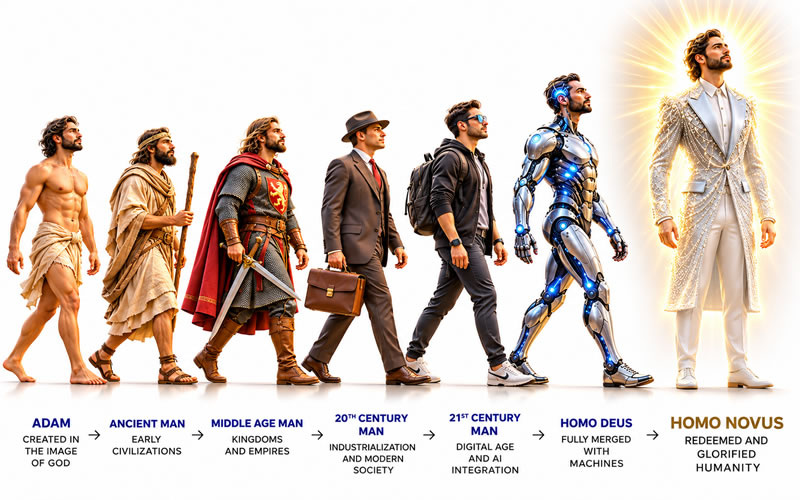
Humanity is racing to upgrade itself through artificial intelligence, biotechnology, and genetic engineering. But is Homo sapiens in its current form the final chapter of the human story? The Bible reveals a future far greater than anything technology can achieve. It is a new humanity in Jesus Christ. The Human Species Is Approaching a Turning Point For thousands of years, human beings have occupied the centre stage of life on Earth. In scientific terms, we belong to a species known as Homo sapiens. The name scientists use for modern humans, including you and me. We have built civilizations, explored the oceans, travelled into space and developed technologies that our ancestors could scarcely have imagined. We have conquered diseases that once wiped out entire populations, connected distant parts of the world through the internet and created machines capable of performing tasks that previously required human intelligence. Yet something remarkable is happening. The very species that has dominated the planet is beginning to question its own future. Artificial intelligence is advancing at an extraordinary pace. Biotechnology is opening possibilities for altering the human body at the genetic level. Scientists are exploring ways to slow ageing, extend healthy lifespans, overcome some of the biological limitations that have defined human existence, and potentially achieve immortality. These developments are not simply technological stories. They are forcing us to reconsider what it means to be human. What happens when machines can perform tasks that once distinguished human intelligence? What happens when genetic engineering gives us greater control over the characteristics of future generations? What happens when biotechnology begins to challenge the limitations of ageing and disease? And perhaps the most important question of all: Is Homo sapiens the final chapter of humanity’s story? I believe the answer is no. In fact, Homo sapiens, as we know it today, is an endangered species. Not necessarily because artificial intelligence or genetic engineering will make us extinct, but because the Bible reveals that our present human condition is not God’s final intention for humanity. There is another humanity coming. I call it Homo Novus. It comes from two Latin words: homo (human) and novus (new). Together, they mean “new human” or “new humanity.” In this context, Homo Novus represents the new humanity God is bringing into being through Jesus Christ. Homo Deus is Humanity’s Attempt to Upgrade Itself For most of human history, we have accepted certain limitations as unavoidable. We are born, we grow old, we become weak, we get sick, and eventually we die. But modern technology is beginning to challenge some of these assumptions. Artificial intelligence promises to expand our intellectual capabilities. Genetic engineering could help eliminate certain inherited diseases. Biotechnology may eventually offer ways to slow some aspects of ageing. Brain-computer interfaces are opening new possibilities for connecting the human brain with machines. These developments are part of a much larger ambition to move beyond the limitations of ordinary human existence. Historian and author Yuval Noah Harari popularised this ambition in his book Homo Deus. He explores a future in which humanity uses technology to pursue godlike powers, including overcoming death, achieving happiness, and gaining unprecedented control over life. The underlying ambition is not difficult to understand. Who wouldn’t want to live longer, stay healthy, become more intelligent, or escape the suffering of human existence? These possibilities are attractive because they speak to desires that have always existed within us. But there is a more consequential question we must ask. Even if we become healthier, more intelligent, and technologically advanced, will we have overcome the limitations and challenges that define the human condition? Will artificial intelligence and genetic engineering remove greed, hatred, jealousy, selfishness, and corruption from our nature? Technology may improve many aspects of human existence, but it cannot, by itself, solve the spiritual problem at the heart of humanity. We may eventually become more powerful, but power is not the same as goodness. We may become more intelligent, but intelligence is not the same as wisdom. We may learn to manipulate biological processes, but that is not the same as conquering death. Imagine humanity living for thousands of years, still consumed by the same sinful desires, but now armed with greater intelligence, power, and technology. Such advances could magnify our capacity for evil and make its consequences far more devastating. This is where the human ambition represented by Homo Deus or transhuman encounters its greatest limitation. The Problem With Homo sapiens Is Deeper Than Biology To understand why Homo sapiens is not humanity’s final destination, we must go back to the beginning. According to Genesis, God created humanity in His image and likeness. “So God created man in his own image, in the image of God created he him; male and female created he them” (Genesis 1:27). Human beings were created with dignity, purpose, and the capacity to relate to their Creator. We were entrusted with responsibility over creation and called to reflect God’s character in the world. But something went terribly wrong. Through disobedience, sin entered the human experience, and with it came death. God had warned Adam that disobedience would bring death (Genesis 2:16–17). Following the fall, humanity became subject to mortality, suffering, corruption, and separation from God. In Romans 5:12, Paul explains it thus: “Wherefore, as by one man sin entered into the world, and death by sin; and so death passed upon all men, for that all have sinned.” This is important because it reveals that humanity’s greatest problem is not simply that our bodies are ageing or that our brains have limited processing capacity. Our problem is deeper than biology. We are not just a species that needs better hardware, more computing power, or improved genetic programming. We are a humanity that needs redemption. Consider the world around you. We have developed extraordinary technologies, yet wars continue. We have more information than previous generations, yet misinformation and deception spread rapidly. We can communicate across continents in seconds, yet loneliness, hatred and division remain widespread. We can send
Homo Sapiens is an Endangered Species Read More »