Amakiri Welekwe

The Great Sea Is Stirring Again In Our Time

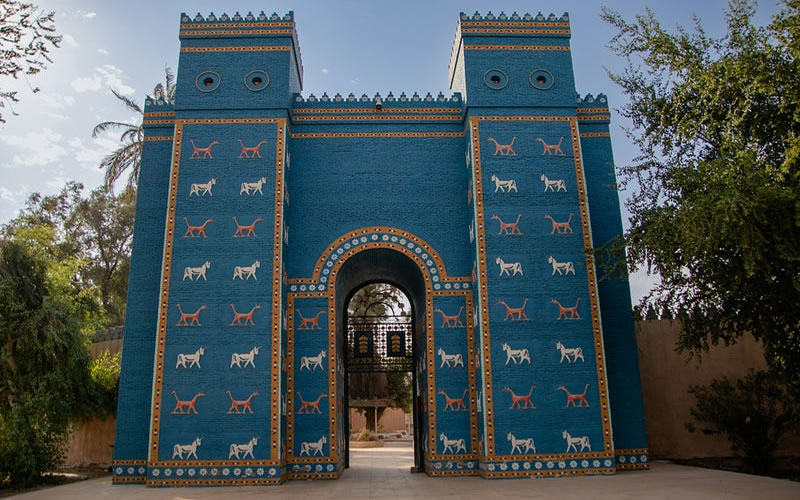
It’s a season of global upheaval across the nations, especially in the Mediterranean world and the Middle East. The world is in transition. The existing world order is gradually falling apart. Long-standing power arrangements are being tested and reshaped. What comes next? In the Book of Daniel 7:2, Daniel wrote: “I saw in my vision by night, and behold, the four winds of heaven were stirring up the Great Sea” (NKJV). This was not ordinary weather imagery. The phrase “four winds of heaven” is symbolic language. Four winds” typically represent forces coming from all directions of the earth (north, south, east, west). In biblical imagery, this points to something global or universal in scope. “Of heaven” indicates these forces are under divine authority. They are not random but part of God’s sovereign activity. The winds are said to be “stirring up the Great Sea”, which symbolizes chaos among nations or peoples (the “sea” often represents humanity or the nations in prophetic literature). So when you piece this together, the “four winds of heaven” refers to God-directed forces acting across the whole world, stirring up political upheaval and turmoil among nations. The “Great Sea” in the context of Daniel’s vision represents the turbulent Mediterranean-centered world from which successive empires would arise. This sets the stage for the vision that follows, where four beasts (kingdoms) emerge from this chaos. Out of that stirred sea came four beasts which represent four world empires that shaped human history: Babylon Medo-Persia Greece Rome What was prophecy in Daniel’s day is now history. Babylon rose from regional upheaval. Persia emerged through coalition and conquest. Greece burst forth under Alexander with astonishing speed. Rome consolidated power and dominated the known world with iron-like strength. After Rome, many other powerful empires and systems of power emerged across the Mediterranean and the European sphere. Major examples include the Ottoman Empire, the Holy Roman Empire, the European colonial empires, and eventually the modern Western-led global order. Each empire arose after periods of geopolitical instability, war, shifting alliances, and societal upheaval. The sea was stirred, and powerful empires emerged. For much of the twentieth century, especially after World War II, the world was shaped largely by Western powers and institutions. Economic systems, military alliances, global finance, trade routes, technological development, and international governance were heavily centered around the United States and its European allies. This created a relatively unified global order with Western influence at its core. However, that order is now gradually shifting toward a more multipolar world. Today, the Mediterranean and Middle Eastern world is once again being stirred. Recent escalation involving Israel, Iran, and the United States has intensified instability across the region. The conflict has spread tensions across Lebanon, the Gulf region, shipping routes, energy markets, and regional alliances. Missile exchanges, military strikes, strategic realignments, and economic disruptions are reshaping the Middle East. The conflict is no longer isolated; it is affecting the broader geopolitical order surrounding the Mediterranean and adjoining regions. For students of biblical prophecy, this raises an important question: Could this be part of the “stirring” preceding the arrival of what would be the last world empire before the Kingdom of God takes over, as described in the book of Daniel and Revelation? Daniel’s Prophetic Pattern Daniel’s visions reveal a repeated prophetic pattern throughout history. First comes turmoil among nations. Out of that chaos emerges political consolidation. This leads to the rise of empires and eventually the concentration of power under dominant rulers. Yet no empire lasts forever. Each kingdom ultimately faces divine judgment and falls. This pattern already unfolded historically through the rise and fall of Babylon, Medo-Persia, Greece, and Rome. But Daniel’s prophecy does not end with ancient Rome. He also foresaw a final stage of human government represented by the ten toes of iron mixed with clay in Daniel 2 and the ten horns on the fourth beast in Daniel 7. This final system appears both strong and divided—powerful externally yet internally fragile. It begins as a coalition of rulers or kingdoms, but eventually authority becomes centralized under a dominant leader. According to the prophecy, this final phase of human rule precedes divine judgment and the full arrival of the Kingdom of God under Jesus. He alone is worthy to rule the World. The Mediterranean World and the Final Empire Historically, the Roman Empire encompassed: Southern and Western Europe, Parts of the Middle East, North Africa around the Mediterranean basin. Daniel’s fourth kingdom is traditionally understood as Rome. The ten horns are a future empire that arises from the final phase of that same fourth kingdom. That means the final phase of the world empire emerges from the broader Roman sphere. This does not necessarily mean ancient Rome will literally return. The prophecy points toward a future political order arising from regions historically shaped by Roman civilization and Mediterranean geopolitics. Today, the Mediterranean region remains one of the most strategically important areas on earth: military alliances, energy routes, trade corridors, religious tensions, migration crises, and global diplomacy all converge there. The “Great Sea” is stirring again. From Regional Conflict to Global Authority The Bible, in Daniel 7 and Revelation 13, describes a prophetic progression toward the development of the final world system. First, multiple rulers or kingdoms emerge together within a larger political structure. Over time, power gradually becomes centralized, and a dominant leader rises from within that system. Daniel calls this ruler the “little horn,” while Revelation describes him as the “beast.” As his authority expands, the system’s influence extends beyond its regional origins to achieve global political, economic, and ideological dominance. In Book of Daniel, the ten kings appear as rulers arising from the final phase of the fourth kingdom. Out of this coalition of powers, a central ruler described as the “little horn” emerges and gains dominance among them. Book of Revelation says the kings eventually “give their power and authority to the beast,” indicating a transfer from shared authority within the kingdom to increasingly centralized rule

The Great Sea Is Stirring Again In Our Time Read More »

How God’s Decisive Acts in History Make People and Angels Sing

There’s something I started noticing as I carefully traced the major moments in the unfolding story of the Bible. At first, it didn’t seem like a big deal, just a small detail easy to overlook. But the more I paid attention, the more it stood out to me. When God Acts, Song Follows  Whenever God acts decisively, in a clear and powerful way, people respond the same way: they sing. It wasn’t something I expected to find over and over again, but it kept showing up. It’s as though song is the natural human and even heavenly response when God’s promises move from words into reality. You see it as early as creation. Though Genesis records the act itself in simple, powerful language, later Scripture pulls back the curtain and tells us something more. In Job 38:7, creation is described as a moment when “the morning stars sang together, and all the angels shouted for joy.” Before humanity even finds its voice, heaven is already responding. Why? Because something God spoke has now come into being. Promise meets fulfillment, and song breaks out. Then, as you move forward, the pattern continues unmistakably. After the Red Sea opens and Israel walks through on dry ground, what happens next? A burst song. In Exodus 15, Moses and the people erupt in praise because what had seemed impossible has just happened. God said He would deliver them, and now they are standing on the other side of the sea. The song is their way of saying, “God has done exactly what He said.” And if you pay attention, you start to realize something deeply personal: A song is what happens when you finally see what you’ve been trusting God for. When you come to the birth of Jesus Christ, the pattern intensifies. The Gospel of Luke reads almost like a soundtrack. Mary sings (Luke 1:46–55). Zechariah prophesies in song (Luke 1:67–79). And then heaven itself does the same thing, “a multitude of the heavenly host” fills the sky, declaring: “Glory to God in the highest, and on earth peace…” (Luke 2:13–14) Heaven does not whisper this moment. It sings it. Why? Because a promise spoken across generations has just entered the world in flesh. The waiting is over. God has done what He said. Then comes the cross and the silence of the tomb. And for a moment, it seems like the pattern might break. But it doesn’t. The resurrection of Jesus is announced, not sung, in that instant, but very quickly, it becomes the greatest song the Church has ever carried. You hear it echo in passages like 1 Corinthians 15:54–57: “Death is swallowed up in victory… Thanks be to God, who gives us the victory through our Lord Jesus Christ.” What starts as an announcement becomes a message the Church cannot stop declaring. It turns into worship, preaching, and eventually song. Across generations and cultures, many hymns and worship songs celebrate the resurrection of Jesus. Each echoing the same message: death did not win, and Christ is alive. God fulfilled his promise. In the visions of the Book of Revelation, this pattern reaches its fullest expression. Songs erupt as: God’s holiness is revealed: People respond in worship because they clearly see God’s greatness, purity, and power. Redemption through Christ is seen: Praise rises as it becomes clear to people that God saved them from eternal damnation through the sacrifice of Jesus, and they respond with gratitude and worship. God delivers His people from suffering: Song follows as people experience God stepping in to rescue them through the pain and suffering of the great tribulation and the onslaught of the beast. The faithful overcome and win: Praise breaks out because it is clear that staying faithful to God even in the midst of suffering was not in vain. He brings them through to victory. Songs of praise break out again and again because each moment shows something important about what God is doing. The Loudest Praise Yet as Heaven Erupts at the Coming King In Revelation 19, just before the return of Christ, the songs of praise grew even louder and more thunderous as it became obvious to them that the long-awaited moment of the Second Coming of Jesus and the Wedding Feast of the Lamb had finally arrived. These faithful believers had been waiting for thousands of years for this moment when they would experience the bodily resurrection, as God had promised them. Their response was described as sounding like “the roar of mighty ocean waves or the crash of loud thunder”: “Praise the Lord! For the Lord our God, the Almighty, reigns. Let us be glad and rejoice, and let us give honor to him. For the time has come for the wedding feast of the Lamb, and his bride has prepared herself ” (Revelation 19:6-7). This is not a gentle hymn. This is not a quiet reflection. This is explosive, collective, undeniable praise. Why? Because at that moment, Jesus is about to return. The kingdom of God is about to be fully established. Everything is about to be completed. If you’ve ever really waited for something, through uncertainty, through doubt, through long stretches where nothing seemed to change, then you have a glimpse of what this moment represents. Now multiply that across all of history. Every promise. Every prophecy. Every hope. Every prayer that has ever been asked, “God, when will You make things right?” “When will thy kingdom come?” This is the answer. And the response is song. Everything God said is now an undeniable reality. That’s why the praise is louder here than anywhere else. It’s not just another fulfilled promise. It’s the fulfillment of all of them. The birth proved God keeps His word. The resurrection proved that nothing can stop it. But the return, the final establishment of His kingdom, proves that not one word has failed. Living Between Promise and Fulfillment  And this is where it becomes personal for you. Because you are

How God’s Decisive Acts in History Make People and Angels Sing Read More »

Scroll to Top