
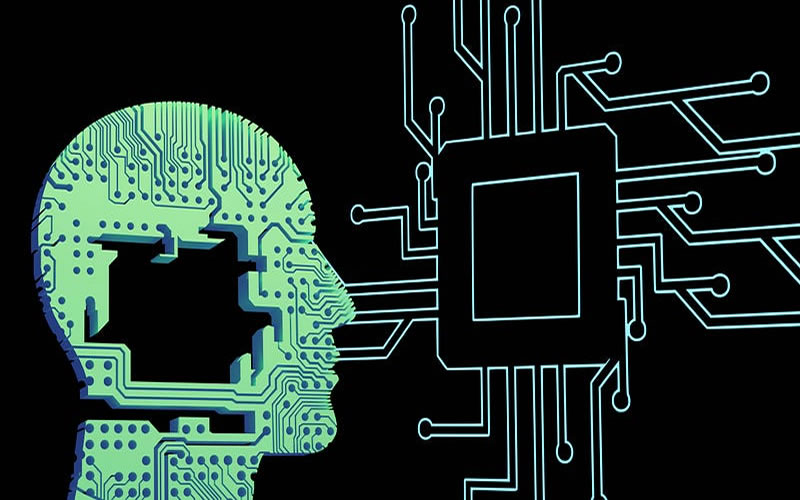
What Happens When AI Becomes Smarter Than Humanity?
We are living through a remarkable moment in human history. A small group of frontier AI companies is engaged in a race to develop something that could fundamentally change the future of humanity. The companies describe their missions in different ways, but when you look beneath the language, the common ambition is ultimately the development of artificial general intelligence (AGI). In other words, these companies are not simply trying to build better chatbots. They are pushing toward increasingly general machine intelligence. The immediate race is about building models that can reason better, understand more, use tools, write software, conduct research, and act autonomously. But the larger destination is the possibility of creating an intelligence that can operate across a vast range of domains For most of human history, we humans have been the most intellectually capable species or living thing on Earth. We have used our intelligence to understand nature, develop science, build civilizations, create technologies, and reshape the planet. AGI raises the possibility of creating another form of intelligence whose capabilities could eventually exceed ours across many of these domains. And that brings us to a question that is much bigger than technology: What happens to humanity if these companies actually succeed? What Happens When We Are No Longer the Smartest? Imagine a future in which AI can outperform human beings in programming, engineering, scientific research, mathematics, medicine, writing, analysis, design, and strategic planning. Imagine AI agents capable of carrying out complex tasks independently and robots capable of applying that intelligence in the physical world. If that future fully arrives, humanity will face a crisis deeper than unemployment. We will face an identity crisis. For centuries, human beings have tied their sense of worth to what they can accomplish. We admire intelligence. We reward productivity. We celebrate innovation. We measure success through careers, income, status, and economic contribution. The question is, what happens when the very intelligence that enabled us to dominate the world is no longer uniquely ours? What happens when the machine can do your job better than you? What happens when an AI can write better code than the programmer, conduct research faster than the scientist, analyze contracts better than the lawyer, and design systems more efficiently than the engineer? If the machine can do what you do better than you can, what are you worth? These questions expose something we may have misunderstood about ourselves. Perhaps human worth was never supposed to rest on our ability to outperform everything else. The Crisis of Human Identity Some people in the technology and transhumanist communities believe that as AI becomes more powerful, humans should use technology to enhance themselves and become more capable too so that we don’t get left behind and rendered economically useless. This could mean connecting our brains to computers, using technology to improve memory and intelligence, extending our lifespan, or integrating AI more closely into our bodies and daily lives. There may be genuine benefits in some forms of human augmentation. Technology can help people overcome disabilities, communicate, learn, and accomplish things that would otherwise be impossible. But there is a deeper problem if we begin to believe that technological enhancement is what will make humanity valuable. If human worth depends on intelligence, we will have to become more intelligent. If it depends on productivity, we will have to become more productive. If it depends on competing with machines, we will have to keep upgrading ourselves every time the machines improve. Where does that end? It appears we have allowed economic concepts such as productivity, human capital, income, and labour-market value to bleed into our understanding of human worth. If machines can eventually provide enormous amounts of economically valuable intelligence, humanity may discover that it has been confusing economic usefulness with human worth all along. The Creator of humanity made the answer clear from the very beginning: human beings are valuable because they are made in the image of God (Genesis 1:26–27). The Image of God Genesis does not introduce humanity by describing us as the world’s most productive workers, most intelligent problem-solvers, or most economically valuable organisms. That statement changes everything. Human beings are valuable not because of what they can produce, how intelligent they are, how much money they earn, or how useful they are to society. Human beings are valuable because they bear the image of their Creator. God later made this clear when He established the sanctity of human life after the flood: “Whoever sheds human blood, by humans shall their blood be shed; for in the image of God has God made mankind” (Genesis 9:6). In other words, the value of human life is grounded in the image of God. A person’s worth does not rise or fall according to their abilities, achievements, or usefulness. It does not begin with your ability to compete with machines. It begins with God. The image of God gives human life a dignity that cannot be measured by economic productivity or technological capability. To be made in God’s image means that humanity was created to represent God’s character and rule creation in partnership with God. God also gave us a responsibility, or vocation. That vocation is to fill the earth, care for His creation, develop it, and exercise responsible authority over it. (Genesis 1:28; 2:15). In other words, we were created not simply to exist or survive, but to cultivate the world God entrusted to us and help it flourish. To cultivate creation means discovering how creation works and using that knowledge responsibly. It means building, farming, designing, teaching, healing, creating, governing, protecting, and developing what God has entrusted to us. The engineer, scientist, farmer, teacher, artist, entrepreneur, cab driver, or craftsman can all participate in this vocation. Human work was never about earning money or accumulating wealth. It was about participating in God’s purposes for creation. But We Missed The Mark There is a problem. Humanity did not remain faithful to this vocation. Instead of trusting God, we sought autonomy,
What Happens When AI Becomes Smarter Than Humanity? Read More »