
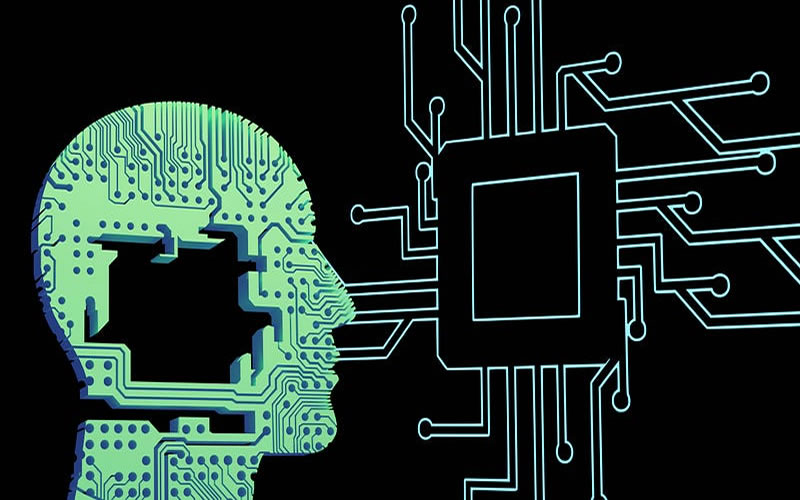
Homo Novus vs. Homo Deus: Why the Resurrection Offers Humanity a Better Future Than Technological Immortality
Humanity has always dreamed of becoming more than human. Ancient civilizations searched for the Fountain of Youth. Alchemists searched for the elixir of life. Today, scientists and entrepreneurs are investing billions of dollars in artificial intelligence, genetic engineering, nanotechnology, brain-computer interfaces, and anti-aging medicine. The goal is no longer simply to cure disease. Increasingly, it is about transcending the biological limitations of Homo sapiens itself and creating a technological utopia. Few writers have described this vision more clearly than historian and futurist Yuval Noah Harari. In his book Homo Deus, Harari argues that after largely overcoming famine, plague, and war, humanity’s next great ambition is to pursue happiness, godlike intelligence and knowledge, and eventually immortality. According to him, humans will seek to redesign themselves through science and technology. Homo sapiens, he argues, may eventually give rise to Homo Deus—a technologically enhanced species possessing abilities that previous generations could only attribute to gods. “Having secured unprecedented levels of prosperity, health and harmony… humankind’s next targets are likely to be immortality, happiness and divinity” (Yuval Noah Harari). It is one of the most ambitious visions ever proposed. It is also one that raises an important question. Should humanity become more powerful before it becomes better? Harari’s Own Diagnosis One of the things I admire most about Harari is his intellectual honesty. Unlike many techno-optimists, he does not assume that greater intelligence automatically produces greater wisdom. In fact, he repeatedly warns that humanity’s greatest danger is not a lack of technological progress but a lack of moral progress. Perhaps nowhere is this clearer than in one of his most insightful observations: “If humans were only wise, we would never misuse our creations. If we were only stupid, we would never have invented them. But we are wise enough to create incredible things, and stupid enough to misuse them. This is a basic tension in human history.” That single statement may be one of the best summaries of the human condition ever written. Harari continues: “One of the most powerful forces in history is human stupidity. We know that nuclear weapons could destroy the whole of humanity. We know that AI can now escape our control. And yet, we keep on producing it.” Elsewhere he writes, “We should never underestimate human stupidity. Both on the personal and on the collective level, humans are prone to engage in self-destructive activities.” Perhaps his greatest warning is this: “The danger is that if we invest too much in developing AI and too little in developing Human Consciousness, the very sophisticated Artificial Intelligence of computers might only serve to empower the Natural Stupidity of Humans.” These are Harari’s own assessment of humanity. In Sapiens, Homo Deus, and 21 Lessons for the 21st Century, he repeatedly observes that although humans have become extraordinarily intelligent, they remain deeply susceptible to myths, tribalism, short-term thinking, self-deception, and destructive behavior. We possess unprecedented power but often lack the wisdom to use it responsibly. In another memorable observation, Harari writes that humanity is now “more powerful than ever before, but has very little idea what to do with all that power.” That statement may unintentionally expose the greatest weakness in the Homo Deus project. Technology can make us more powerful, but it cannot tell us what kind of people should possess that power. Homo Deus Cannot Cure the Human Heart Imagine that science succeeds in eliminating aging. The first question is not whether such a breakthrough is possible, but who will have access to it. Will it be available to everyone, or only to the wealthy? Will governments use it to improve the lives of their citizens, or will powerful nations and military regimes exploit it to strengthen their dominance? The technology itself cannot answer those questions. It simply provides the capability. Now imagine that artificial intelligence makes humans a thousand times more intelligent. Who decides how that intelligence should be used? Will it be directed toward curing disease, ending poverty, and protecting the planet? Or will it be used to develop more sophisticated weapons, manipulate public opinion, and concentrate power in the hands of a few? Intelligence alone cannot determine the right course of action. Suppose genetic engineering eventually enables us to create “superior” human beings. Superior according to whose definition? Superior in strength? Intelligence? Beauty? Productivity? Obedience? Every answer reflects a moral value judgment, and technology cannot tell us which values are right. It can show us how to achieve a goal, but it cannot tell us which goals are worth pursuing. This exposes the fundamental limitation of Homo Deus. Technology excels at answering how, but it struggles to answer why. It can redesign the body, but it cannot transform the human heart. A perfectly healthy tyrant is still a tyrant. An immortal criminal is still a criminal. A superintelligent narcissist is simply more dangerous than an ordinary one. Remarkably, Harari himself recognizes this dilemma. Throughout his writings, he acknowledges that humanity has become extraordinarily powerful while remaining morally fragile. The Bible has described this same condition for thousands of years, and it gives it a name: sin. According to Scripture, humanity’s greatest problem is not mortality; mortality is the consequence. The deeper problem is humanity’s separation from its Creator, which has corrupted every aspect of human nature. Pride, selfishness, greed, violence, envy, and rebellion are not software bugs that can be patched with better algorithms or biological defects that can be edited out of our DNA. They are conditions of the human heart. When I say human heart, I am not referring to the physical organ that pumps blood through the body. I am referring to the inner person from which our thoughts, desires, motives, and choices emanate. You could dissect every cell of the biological heart under a microscope and never find pride, greed, hatred, envy, or selfishness to remove. These are moral and spiritual realities, not biological defects that can be edited out with a scalpel or rewritten through genetic engineering. Technology may continue to increase our