
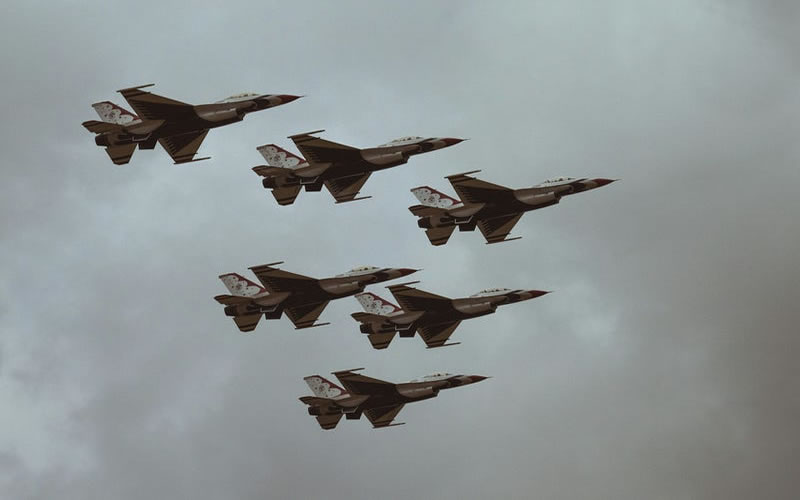
The Great Sea Is Stirring Again In Our Time
It’s a season of global upheaval across the nations, especially in the Mediterranean world and the Middle East. The world is in transition. The existing world order is gradually falling apart. Long-standing power arrangements are being tested and reshaped. What comes next? In the Book of Daniel 7:2, Daniel wrote: “I saw in my vision by night, and behold, the four winds of heaven were stirring up the Great Sea” (NKJV). This was not ordinary weather imagery. The phrase “four winds of heaven” is symbolic language. Four winds” typically represent forces coming from all directions of the earth (north, south, east, west). In biblical imagery, this points to something global or universal in scope. “Of heaven” indicates these forces are under divine authority. They are not random but part of God’s sovereign activity. The winds are said to be “stirring up the Great Sea”, which symbolizes chaos among nations or peoples (the “sea” often represents humanity or the nations in prophetic literature). So when you piece this together, the “four winds of heaven” refers to God-directed forces acting across the whole world, stirring up political upheaval and turmoil among nations. The “Great Sea” in the context of Daniel’s vision represents the turbulent Mediterranean-centered world from which successive empires would arise. This sets the stage for the vision that follows, where four beasts (kingdoms) emerge from this chaos. Out of that stirred sea came four beasts which represent four world empires that shaped human history: Babylon Medo-Persia Greece Rome What was prophecy in Daniel’s day is now history. Babylon rose from regional upheaval. Persia emerged through coalition and conquest. Greece burst forth under Alexander with astonishing speed. Rome consolidated power and dominated the known world with iron-like strength. After Rome, many other powerful empires and systems of power emerged across the Mediterranean and the European sphere. Major examples include the Ottoman Empire, the Holy Roman Empire, the European colonial empires, and eventually the modern Western-led global order. Each empire arose after periods of geopolitical instability, war, shifting alliances, and societal upheaval. The sea was stirred, and powerful empires emerged. For much of the twentieth century, especially after World War II, the world was shaped largely by Western powers and institutions. Economic systems, military alliances, global finance, trade routes, technological development, and international governance were heavily centered around the United States and its European allies. This created a relatively unified global order with Western influence at its core. However, that order is now gradually shifting toward a more multipolar world. Today, the Mediterranean and Middle Eastern world is once again being stirred. Recent escalation involving Israel, Iran, and the United States has intensified instability across the region. The conflict has spread tensions across Lebanon, the Gulf region, shipping routes, energy markets, and regional alliances. Missile exchanges, military strikes, strategic realignments, and economic disruptions are reshaping the Middle East. The conflict is no longer isolated; it is affecting the broader geopolitical order surrounding the Mediterranean and adjoining regions. For students of biblical prophecy, this raises an important question: Could this be part of the “stirring” preceding the arrival of what would be the last world empire before the Kingdom of God takes over, as described in the book of Daniel and Revelation? Daniel’s Prophetic Pattern Daniel’s visions reveal a repeated prophetic pattern throughout history. First comes turmoil among nations. Out of that chaos emerges political consolidation. This leads to the rise of empires and eventually the concentration of power under dominant rulers. Yet no empire lasts forever. Each kingdom ultimately faces divine judgment and falls. This pattern already unfolded historically through the rise and fall of Babylon, Medo-Persia, Greece, and Rome. But Daniel’s prophecy does not end with ancient Rome. He also foresaw a final stage of human government represented by the ten toes of iron mixed with clay in Daniel 2 and the ten horns on the fourth beast in Daniel 7. This final system appears both strong and divided—powerful externally yet internally fragile. It begins as a coalition of rulers or kingdoms, but eventually authority becomes centralized under a dominant leader. According to the prophecy, this final phase of human rule precedes divine judgment and the full arrival of the Kingdom of God under Jesus. He alone is worthy to rule the World. The Mediterranean World and the Final Empire Historically, the Roman Empire encompassed: Southern and Western Europe, Parts of the Middle East, North Africa around the Mediterranean basin. Daniel’s fourth kingdom is traditionally understood as Rome. The ten horns are a future empire that arises from the final phase of that same fourth kingdom. That means the final phase of the world empire emerges from the broader Roman sphere. This does not necessarily mean ancient Rome will literally return. The prophecy points toward a future political order arising from regions historically shaped by Roman civilization and Mediterranean geopolitics. Today, the Mediterranean region remains one of the most strategically important areas on earth: military alliances, energy routes, trade corridors, religious tensions, migration crises, and global diplomacy all converge there. The “Great Sea” is stirring again. From Regional Conflict to Global Authority The Bible, in Daniel 7 and Revelation 13, describes a prophetic progression toward the development of the final world system. First, multiple rulers or kingdoms emerge together within a larger political structure. Over time, power gradually becomes centralized, and a dominant leader rises from within that system. Daniel calls this ruler the “little horn,” while Revelation describes him as the “beast.” As his authority expands, the system’s influence extends beyond its regional origins to achieve global political, economic, and ideological dominance. In Book of Daniel, the ten kings appear as rulers arising from the final phase of the fourth kingdom. Out of this coalition of powers, a central ruler described as the “little horn” emerges and gains dominance among them. Book of Revelation says the kings eventually “give their power and authority to the beast,” indicating a transfer from shared authority within the kingdom to increasingly centralized rule
The Great Sea Is Stirring Again In Our Time Read More »