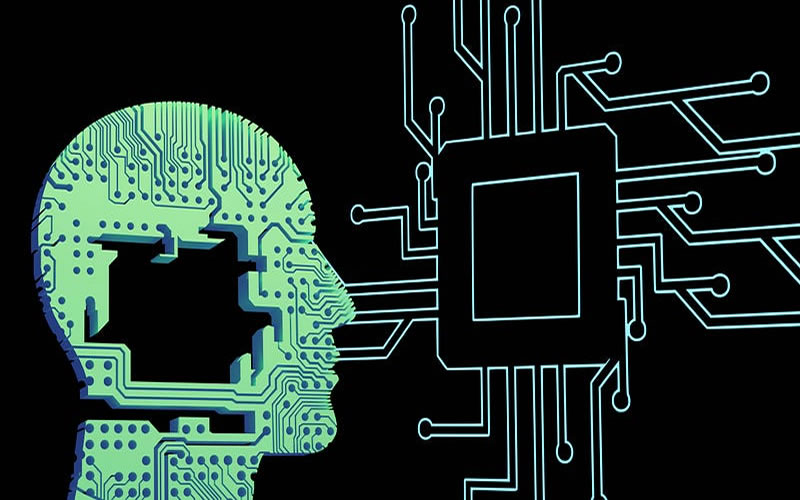
Artificial intelligence can now perform tasks that once required human intelligence. Scientists are exploring ways to edit genes, treat diseases, and extend human life. Researchers are also developing technologies that could change how we interact with computers and, potentially, how our brains and bodies function.
These technologies are improving our lives in remarkable ways, but it is also opening the door to a future where we may no longer be satisfied with being human as we are today. Modern technology is redesigning what it means to be human. But what happens when humanity begins to believe that it can overcome its own limitations and determine its own future? Does becoming more powerful make us better human beings?
What Does Homo Deus Mean?
Homo Deus is a Latin expression commonly translated as “god-man” or “human god.” In his book, Homo Deus: A Brief History of Tomorrow, Yuval Noah Harari uses the term to explore a possible future in which human beings use science and technology to acquire abilities that have traditionally been associated with gods.
The idea is not that humans will literally become the all-powerful Creator described in the Bible. Rather, Harari examines how advances in biotechnology, AI, and other technologies could give people unprecedented control over life, their bodies, and their environment.
Consider what humanity has already achieved. We can transplant organs, edit certain genes, communicate across continents instantly, and use machines to perform tasks that once demanded years of human training. These achievements would have seemed extraordinary to earlier generations.
Now imagine what might become possible if these technologies advance much further. Could we significantly extend human life? Could we redesign aspects of our biology? Could intelligent machines become smarter than us and make decisions more effectively than we can?
How Does Humanity Hope to Become More Than Human?
The idea of evolving beyond our current human limitations is driven by advances in several areas of technology. Although these fields are different, they share a common goal. They aim to expand human abilities and overcome limitations that have long defined our lives.
1. Artificial Intelligence
Artificial intelligence is changing how we work, communicate, learn, and make decisions. AI systems can analyse enormous quantities of information, recognise patterns and perform tasks that previously required considerable human effort.
As machines become more intelligent than humans and outperform us in more areas, some experts and futurists propose merging human intelligence with AI to enhance our abilities and keep pace with machines.
This raises questions about identity, freedom, human control, and decision-making. And what happens when people begin to trust algorithmic decisions more than their own judgement?
2. Biotechnology and Genetic Engineering
Biotechnology is giving scientists new ways to understand and influence living organisms. Gene-editing technologies, for example, offer possibilities for treating certain genetic diseases and advancing medical research.
Some researchers and futurists imagine going further by using genetic engineering and other biological interventions to enhance human abilities and create designer babies and superhumans.
The possibilities raise difficult questions. If we gain greater control over human biology, who should decide which characteristics are desirable? Should we attempt to eliminate particular weaknesses, or could the pursuit of biological perfection create new forms of discrimination?
The ability to modify aspects of life brings enormous responsibilities. Not every change we can make is necessarily a change we should make.
3. The Pursuit of Longer Life
We all want to live longer and avoid suffering. Modern medicine has helped us survive diseases and conditions that once caused widespread premature death.
Longevity research seeks to understand ageing and find ways to extend healthy life. Some researchers and technology advocates envision much more radical breakthroughs that could significantly extend the human lifespan. In fact, several high-profile companies and ventures are backed by billionaires whose stated personal philosophies are explicitly about defeating death and achieving indefinite lifespans.
But there is an important distinction between extending life and overcoming death. Even substantial advances in longevity would not, by themselves, establish that humanity can achieve immortality. Nevertheless, the desire to defeat death remains one of the most striking ambitions associated with the Homo Deus vision.
Why Does Humanity Want to Transcend Its Limitations?
Humanity’s desire to overcome the human condition is nothing new. We have developed medicines to fight disease, tools to overcome physical weakness and technologies to travel farther and communicate faster. Much of this progress has improved human life. There is nothing inherently wrong with seeking cures for diseases, reducing suffering or developing technologies that help people.
But can these achievements really fulfil our ultimate aspirations as humans? We want to live longer because death takes away people we love and brings our own lives to an end. We want greater control because uncertainty makes us uncomfortable. We pursue knowledge because we want to understand the world and influence what happens to us.
Technology can solve many of our problems and make life easier. But will it make us truly happy and fulfilled? Even if we live longer, become wealthier, and achieve things that once seemed impossible, we may still struggle with greed, jealousy, loneliness, and the search for meaning. In other words, making life better on the outside does not necessarily resolve the problems we face within ourselves.
What Happens to Humanity If We Merge with Machines and Become Homo Deus?
The pursuit of god-like capabilities raises legitimate concerns. The problem isn’t necessarily technological advancement itself, but the assumption that greater power will inevitably lead to a utopia and a better future.
What happens when technology moves beyond being something we use and becomes something integrated into our bodies and brains? If we begin merging with machines, modifying our biology and enhancing our mental and physical abilities, we may eventually change not only how we live, but also what it means to be human.
If we increasingly depend on machines to think, remember, communicate, and make decisions, where do we draw the line between human ability and machine capability? At what point might enhancing ourselves begin to change the very nature of who we are?
Today, hackers can access computers, steal personal information, and manipulate digital systems. If future brain-computer interfaces become widely used, security failures could potentially go beyond our devices and affect technologies connected to our bodies or brain functions.
If the tools we create to enhance ourselves eventually give others and AI systems greater power over our minds, will we truly be more free, or will we have made ourselves easier to control and manipulate? Could someone manipulate what we see, influence our decisions, or exploit our biological vulnerabilities without our knowledge? We need to think about these scenarios.
Will Becoming More Powerful Make Us Better Human Beings?
Even if technology enables us to become stronger, smarter, or longer-lived, it does not follow that we will become more loving, just, or wise. Greater intelligence does not automatically produce greater compassion, and greater power does not guarantee that we will use it responsibly.
Technology may help us communicate, but it cannot guarantee that we will love one another. It may help us accumulate wealth, but it cannot ensure that we will use it justly. It may extend our lives, but a longer life does not automatically give us a meaningful one.
Imagine a future in which people can enhance their intelligence, overcome many physical limitations, and exercise unprecedented control over their environment. Would these achievements eliminate greed, selfishness, hatred, or the desire to dominate others?
A person with greater intelligence can still act selfishly. A leader with more power can still oppress others. A society can possess extraordinary scientific knowledge and advanced technology and still be torn apart by hatred, injustice, and war.
If technology makes us more powerful without helping us become more responsible, we could end up creating bigger problems than the ones we hoped to solve. The real challenge is not just how much we can achieve, but whether we have the wisdom to use our achievements (technology) responsibly.
Our history suggests that humanity’s ability to gain power often advances faster than its ability to use that power wisely and responsibly. We have made extraordinary scientific progress, yet we continue to struggle with war, corruption, greed, injustice, and the abuse of power.
Conflicts continue to devastate some countries despite humanity’s remarkable advances in science and technology. These conflicts remind us that we can become more advanced in what we know and what we can do without becoming wiser in how we treat one another. If we enhance our capabilities without addressing the deeper problems of human nature, we may simply become more capable of doing both good and evil.
Humanity’s condition involves not only what we cannot do, but also what we choose to do with what we can. The biblical story describes humanity as created in God’s image, entrusted with responsibility for creation, and subsequently corrupted by sin. Its answer to humanity’s predicament is not simply that we need more knowledge or greater power. We need reconciliation with God and transformation of our lives.
This does not mean rejecting scientific progress. It means recognising that technological advancement and the redemption of humanity are two different things.
Is Another Future Possible Beyond Homo Deus?
If our only problem is that we lack sufficient knowledge, technology may appear to offer the solution. If our greatest limitation is biological, we may look towards genetic engineering and longevity research. But if our problem also involves sin, broken relationships, and estrangement from God, technological advancement alone cannot provide the answer.
The good news is that God has acted in history through Jesus Christ to redeem humanity from its tendency toward evil. Jesus’ resurrection marks the beginning of his victory over sin and death. If Christ has indeed been raised, then humanity’s future need not depend on becoming Homo Deus through technology, but on the hope of a new humanity in Christ.
Paul describes Christ as the firstfruits of those who have died and explains that those who belong to him will also be raised (1 Corinthians 15:20–23). Jesus’ return will bring God’s purpose for humanity to completion.
This is why I wrote Homo Novus: A Brief His-story of Tomorrow to open our eyes to what God is already doing in history. While Homo Deus envisions a future in which humanity transcends its limitations through technology, Homo Novus points to Jesus Christ as the first specimen of the new humanity God intends us to become. One is a vision of what humanity might achieve; the other is grounded in what has already happened—the resurrection of Jesus Christ, the firstborn of the new creation.
The first victory has already been won. The first specimen already lives. And because He lives, everyone who belongs to Him will one day share in the same glorious life