
kingdom of God

How the Reality of God’s Kingdom Should Change the Way We Live

Imagine knowing with absolute certainty that one day every political system, every empire, every government, and every earthly power will give way to one final Kingdom. Its King will never die, never be replaced, never lose His authority, and never surrender His throne. That is the claim at the heart of the Christian message. The concept of the Kingdom of God is not a religious metaphor or a comforting idea about heaven after death. It presents God’s Kingdom as the ultimate reality toward which history is moving. Daniel saw human kingdoms rise and fall, but he also saw a Kingdom established by God that would never be destroyed. He saw the Son of Man receiving an everlasting dominion. Centuries later, Jesus appeared announcing, “The kingdom of God has come near.” If this is true, then it is not a subject we can afford to treat casually. How should we live today if Jesus really is the King who will ultimately rule the world? We Have Seen Kingdoms Rise and Fall Before Human history is filled with kingdoms that once appeared unstoppable. Babylon seemed invincible until it wasn’t. Rome dominated the known world until it fragmented and disappeared. Great rulers built enormous monuments to their power, but eventually those rulers died, and their kingdoms passed into history. Every human kingdom carries the same limitation: it is temporary. Kings die. Governments change. Borders move. Nations rise and fall. Economic systems collapse and are rebuilt. Technologies that seem revolutionary today eventually become obsolete. Yet Daniel’s vision presents something fundamentally different. God’s Kingdom does not appear as merely the next empire in a long sequence of empires. It is the Kingdom that ultimately outlasts them all. Daniel 2:44 says that God will establish a kingdom that “will never be destroyed” and that “will itself endure forever.” That should make us stop and think. If we knew that a particular earthly government would rule for the next thousand years, we would take its policies seriously. We would want to understand its laws, its ruler, and our relationship to it. But what if the Kingdom of God is eternal? What if Jesus really is the King? Then the wisest thing we can do is understand what that means for us now. Jesus Is Not Simply Another King Jesus is not simply another ruler competing with Caesar, presidents, prime ministers, emperors or political systems. Earthly rulers possess authority for a limited time. Jesus claims authority over heaven and earth. Earthly kings eventually die. Jesus conquered death. Earthly kingdoms require succession. Jesus has no successor. Earthly kingdoms have borders. God’s ultimate Kingdom encompasses creation itself. Earthly rulers can demand external obedience. Jesus calls for the transformation of the heart. And perhaps most remarkably, Jesus does not establish His Kingdom by behaving like the rulers of this world. He conquers through sacrificial love. The King who will ultimately rule the nations first allowed Himself to be nailed to a cross. That is the paradox of God’s Kingdom. The King conquers by giving Himself. The ruler becomes the servant. The greatest becomes the least. The throne is reached through the cross. This is a completely different vision of what true authority looks like. So Why Aren’t People Rushing Toward It? If God’s Kingdom is eternal, if Jesus is the rightful King, and if His Kingdom ultimately outlasts everything else, why aren’t people rushing toward it? Part of the answer is that God’s Kingdom does not currently look like the kingdoms we are accustomed to seeing. We can see governments. We can see armies. We can see money. We can see buildings, technology, and political power. But Jesus compared the Kingdom to a mustard seed, yeast, hidden treasure, and a priceless pearl. The Kingdom can appear small while being infinitely significant. But that’s not all. There is yet another reason. The Kingdom requires us to surrender completely to God. Human beings naturally want to rule themselves. We want to determine our own values, define our own morality, control our own future, and decide what gives our lives meaning. But the message of God’s Kingdom confronts that instinct. It demands our complete allegiance.  Jesus wants to be Lord over our lives, and that means surrendering the throne of our lives to Him. But surrender is not just about accepting a religious belief; it means changing the way we live. It means turning away from our old ways, changing our priorities, and choosing to live according to the values of God’s Kingdom. And that is where many people struggle,  “…the light has come into the world, but people love the darkness rather than the light because they do not want to do what is right. Anyone who does evil things hates the light and will not come to the light, because he does not want his evil deeds to be shown up” John 3:19–20 (GNT). We Often Want the Benefits Without the King Many people want what God can give without wanting God to rule them. We want the Kingdom without the King. Jesus never presented discipleship that way. When He called people to follow Him, He called them to a new allegiance. The rich young ruler discovered that the Kingdom could not simply be added to his existing priorities. Something else occupied the throne of his heart. This is why Jesus said, “Seek first the kingdom of God and his righteousness.” First is the keyword. The World Offers What We Can See Now One of the greatest obstacles to embracing God’s Kingdom is that the world offers rewards we can see and enjoy right now. Money can give us a sense of security, success can bring status, technology can give us power, possessions can provide comfort, and influence can give us a sense of authority. None of these things is necessarily wrong.  God is not against money, success, possessions, technology, influence, or achievement. In fact, these things can be used for good and for the purposes of His Kingdom. The real

How the Reality of God’s Kingdom Should Change the Way We Live Read More »
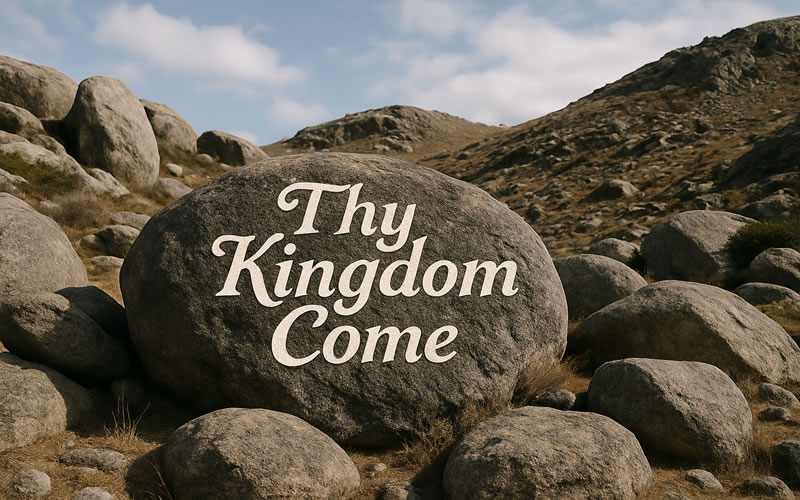
When Will the Kingdom of God Come?

More than six centuries before Jesus was born, God revealed to a pagan king one of the greatest secrets in human history. The king was Nebuchadnezzar of Babylon. He was the most powerful man on earth at the time. Nations trembled before him. Armies marched at his command. Cities fell before his power. To human eyes, Babylon looked invincible. Yet one night, God interrupted the king’s sleep with a dream. It was not an ordinary dream. It was a revelation of the future. The dream troubled Nebuchadnezzar because he sensed it carried tremendous significance. He knew it was a message from a higher power, but he could not understand it. Then God raised up Daniel to reveal both the dream and its interpretation. What Daniel told the king was astonishing. God was showing Nebuchadnezzar where history was headed. The dream was not primarily about Babylon. It was not even primarily about the empires that would follow Babylon. It was ultimately about the Kingdom of God. Daniel explained that the great image in the dream represented a succession of world empires. Babylon would be succeeded by other kingdoms. Those kingdoms would rise, flourish, and eventually fall. Human power would pass from one empire to another until history reached its appointed destination. Then Daniel uttered something very remarkable: “The great God has made known to the king what shall come to pass hereafter.” God was revealing to Nebuchadnezzar when His Kingdom would arrive. Not the exact year. Not the exact century. But the exact point in the prophetic sequence. Nebuchadnezzar could not know how many centuries separated Babylon from that climactic moment. But he knew that  history was moving toward the arrival of God’s everlasting Kingdom. Why Reveal This to Nebuchadnezzar? At first glance, it seems strange that God would reveal such a profound mystery to a pagan king. Why not reveal it to a priest? Why not reveal it to a prophet? Why reveal it to the ruler of Babylon? I think it’s because God wanted the entire world to grasp an important truth: The Most High rules over the kingdoms of men. Babylon appeared supreme. Nebuchadnezzar seemed untouchable. But God was showing him that even the greatest empire on earth was merely the first chapter in a larger story. Babylon would pass away. So would every empire that followed. The mighty image appeared strong and glorious, but it was destined to collapse. Only the Kingdom of God would endure forever. The dream was a divine announcement that human history is not random. Empires do not determine the future; only God does. Kings do not write the final chapter; only God does. History is moving toward a destination already determined by heaven. Therefore, it is only wise to align yourself with what God is doing. The Kingdom Everyone Was Waiting For As generations passed, those who studied Daniel’s prophecy could see where history was heading. God had revealed that the kingdoms of men would not last forever. Babylon would rise and fall. Other empires would follow. But beyond them all stood a coming kingdom established not by human strength but by God Himself. Daniel’s vision of the stone cut without human hands captured the imagination of believers for centuries. They looked forward to the day when God would intervene decisively in human affairs, shatter the powers of this world, judge the nations, and establish His righteous rule over all the earth. The expectation seemed straightforward. The Kingdom of God would arrive with unmistakable power. The stone would strike the image. The empires of men would collapse. Evil would be judged, God’s enemies defeated, and His reign openly displayed before all nations. For generations, God’s people waited for this dramatic moment when heaven would break into history and bring the long story of human rebellion to its end. They expected a visible triumph, a cataclysmic act of divine intervention that no one could miss. Yet when the promised King finally appeared, almost everything unfolded in a way no one expected. The Kingdom Arrived Ahead of Schedule The stone that was destined to crush the kingdoms of the world did not arrive with armies, political power, or catastrophic judgment. The Kingdom arrived quietly, almost unnoticed, through the ministry of Jesus. While many were looking for the final manifestation of the Kingdom, they failed to recognize that the Kingdom itself had already entered history in its hidden form. The King had arrived ahead of schedule. He was born in a manger and raised in an obscure village. He was followed by fishermen, tax collectors, and ordinary people. Nothing about His arrival looked like the dramatic fulfillment many expected. Yet Jesus began proclaiming an astonishing message: “The kingdom of God has come near” (Mark 1:15). How could this be? Rome still ruled. The nations were not judged. The image still stood. The stone had not visibly shattered the kingdoms of the world. And yet Jesus insisted that the Kingdom had arrived. This is what He called the mystery of the Kingdom. The mystery was how the Kingdom of God would come. It was a truth hidden in ages past but now being revealed. Jesus specifically used parables to explain this mystery to his disciples, as recorded in the Gospels. Through the parable of the mustard seed, Jesus taught that the Kingdom would start small and seemingly insignificant, yet would grow into something great and far-reaching (Matthew 13:31–32). Through the parable of the yeast, He showed that the Kingdom would work quietly and invisibly, transforming lives from the inside out until its influence spread throughout the whole lump of dough (Matthew 13:33). These parables revealed a dimension of God’s Kingdom that many had not anticipated. Jesus stated that this secret is given to his followers but remains hidden from those who refuse to believe. When Jesus told his disciples, “The secret of the kingdom of God has been given to you” (Mark 4:11), he was referring to the fact that the kingdom was acting in an unexpected

When Will the Kingdom of God Come? Read More »

In Search of a Utopian Society

Humanity is in search of a utopian society. A utopian society is one that is characterized by benevolent governments that ensure the security, safety and general welfare of its citizens. It’s a society anchored on equity and trust, which treats its citizens with dignity, a society where citizens live in health and abundance, and in a safe environment without fear, a society where citizens have absolute control over their circumstances and environment. We all desire and long for that kind of society even though it has so far eluded us. The search for utopia and the ideal society is as old as humankind itself and runs through civilization. It has led to the invention of all kinds of ideologies and socio-economic and political systems such as monarchy, democracy, communism, totalitarianism, progressivism, egalitarianism, humanism, transhumanism, intentional community, universal basic income, among others. Surprisingly, some of these ideologies have also been the source of untold mass poverty, injustice, terror, oppression and destruction. Those are nothing but signs of dystopia—a dysfunctional society quite the opposite of what society yearns for. More often than not, the future is often presented in our current film and literature menu as a dystopian society. The pursuit of utopia, in any shape or form, indicates that there is undoubtedly within every person’s heart a craving and an empty space that is designed specifically for God. This craving and vacuum cannot be satisfied by anything that is created, but only by the Creator Himself. There is a deep longing within us for a return to Eden (God’s paradise or kingdom), but we want God out of it. The renowned French mathematician and physicist, Blaise Pascal, while reflecting on this truth noted thus: What else does this craving, and this helplessness, proclaim but that there was once in man a true happiness, of which all that now remains is the empty print and trace? This he tries in vain to fill with everything around him, seeking in things that are not there the help he cannot find in those that are, though none can help, since this infinite abyss can be filled only with an infinite and immutable object; in other words, by God Himself. Every time we exclude God from the equation, the ultimate outcome tends to be dystopian and results in more misery for humanity. Our world is perpetually faced with a choice between a society characterized by liberalism and one that is dictatorial. This entails a choice between a world order based on distributed decision making, and one based on centralized decision making. It’s a choice between democracy and dictatorship, between a liberty that could lead to anarchy and self-destruction, or controls that make life more difficult. Some countries have embraced dictatorship and totalitarian control, while others have embraced liberal democracy, which in itself is gradually falling apart due to the growing influence of modern technology. Which system of governance, democracy or dictatorship, is better suited for humanity and likely to emerge as the dominant one? In the hope of a better society, people sometimes demand a change of government, by which they mean a change of political party or politician such as president or prime minister, or even a complete change in the system of government. Interestingly, Jesus’ key message to the world echoes the same sentiments. He said that the basic need of the world is a change in government, and that He was sent to bring about that change. He used the term “Kingdom of God” to describe the kind of change in government that He is bringing (Luke 4:43). The Kingdom of God is a theme that runs through the entire Bible. Humankind was not made for democracy or to run themselves; neither were they made for dictatorship or to be under someone else’s authoritarian control. They were made for the Kingdom of God. They were made to be under a just and benevolent divine King. This is the only way that society will flourish. We were made to be subjects of the life-giving King. This is the only way to find fulfillment and to reach our full potential. The world is in dire need of good leadership—an individual capable of effectively managing and controlling society while granting its citizens complete freedom within those parameters. We are constantly searching for a political figure or political institution that can strike the ideal balance between control and liberty in our social structures. Regrettably, the perfect person or system remains elusive and unattainable. This reality has led to many citizens harboring deep skepticism towards politicians and some have lost all faith in their government and governing institutions. There’s no one who can create a better world for us except the Lord Jesus. When He does, there will for the first time bea harmonious balance between complete control and absolute freedom. In this new world, righteousness, peace, and joy will prevail, creating a perfect society. In this new world, righteousness, peace, and joy will prevail, creating a perfect society. So does this imply that the only message we can offer people in our present unstable world is “Don’t worry; wait for the kingdom and for Jesus to return and fix everything?” If that’s the case, it’s discouraging news. It’s not practical for us to continue living as we are because there’s a possibility we won’t be alive by the time Jesus returns. But here’s where the message of the Kingdom comes into play: The Kingdom of God has already invaded this present age so that men may know something of its blessings even in this corrupt age. While we await Jesus to return and seize the reins of power and establish the fullness of His Kingdom here on earth, you can still enter the Kingdom now. You can come under His rule and government now, and as you do so, you will experience true freedom through the liberating influence of the Holy Spirit working within you (Romans 8:2).

In Search of a Utopian Society Read More »

Scroll to Top